
Iron Guide
How Much Iron Do You Need After Gastric Bypass Surgery?

By David Gans · Gastric bypass patient since January 2024 · Lost 231 lbs · Founder of BypassVitamins.com
I learned pretty fast that iron is one of those things people talk about way too casually after gastric bypass.
Iron Requirement After Gastric Bypass
45-60mg elemental iron daily (ASMBS). Separate from calcium by at least 2 hours. Separate from calcium-containing foods and antacids. Test ferritin at every follow-up blood draw.
You hear a lot about protein. You hear a lot about B12. You hear a lot about calcium. But iron is one of the most common long term problems after bypass, and a lot of patients do not even know what number they are aiming for.
That matters, because guessing is how people end up tired, cold, weak, dizzy, short of breath, or dealing with hair shedding and low ferritin without realizing why.
Comparing bypass vitamins? See all 15 options ranked by price →
I am David Gans. I lost 231 lbs after gastric bypass in January 2024. I am not a medical professional. I write from the patient side. I like clear answers. I like real numbers. And when it comes to iron after gastric bypass, you need both.
Here is the simple version. Iron after bypass is not something you “keep an eye on” once in a while. It is part of your lifelong routine. You need the right supplement, the right dose, the right timing, and the right labs.
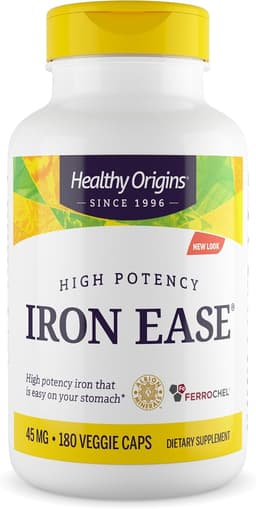
Healthy Origins
Iron Ease 45mg
Exact 45mg ferrous bisglycinate per ASMBS bypass target, 6-month supply, gentle on the stomach.
Buy on Amazon →How much iron do you need after gastric bypass?
Iron Forms: Which Is Easiest on Your Stomach?
| Ferrous Sulfate | Ferrous Bisglycinate | Carbonyl Iron | |
|---|---|---|---|
| absorption | Good | Good | Moderate |
| GI tolerance | Poor | Good | Good |
| Nausea risk | Poor | Good | Good |
| cost | Good | Moderate | Moderate |
You typically need 45-60mg of elemental iron per day total from all supplements combined after gastric bypass, based on ASMBS guidance.
That is the target most bypass patients should know.
ASMBS says that menstruating females and patients who have had Roux-en-Y gastric bypass, sleeve gastrectomy, or BPD/DS should take at least 45-60mg of elemental iron daily, counted cumulatively across all vitamin and mineral supplements. That last part matters. It means you add up everything you take. Not just one pill.
There is also a lower number in the guidelines. Patients at lower risk, such as males and patients without a history of anemia, should receive at least 18mg of iron from their multivitamin. That is where people get confused. They see 18mg on a label and assume they are covered. A lot of bypass patients are not.
This is also where gastric bypass and sleeve get mixed up online. The supplement target for higher risk sleeve patients can overlap with bypass. The difference is that gastric bypass tends to create a higher deficiency risk because of the anatomy of the surgery, not because the iron rules look wildly different on paper.
So if you had gastric bypass, do not assume a standard multivitamin is enough. Your target is usually higher, and your team should confirm whether your current routine actually gets you there.
Most bypass multivitamins contain 45mg iron. See which ones are cheapest per day.
Compare Bypass VitaminsWhy does gastric bypass increase iron deficiency risk?
Gastric bypass increases iron deficiency risk because food no longer passes through the duodenum, which is where most iron is absorbed, and the surgery also lowers stomach acid, which makes iron harder to absorb.
This is the part that makes bypass different from just “eating less.”
After Roux-en-Y gastric bypass, the route your food takes changes permanently. The duodenum gets bypassed. That matters because that is the main area where iron absorption normally happens.
On top of that, lower stomach acid can reduce how well your body breaks down and absorbs iron in the first place. So even if you are taking iron, you are still working with a system that is less efficient at using it.
That is why iron deficiency can show up months or even years later. It is not always dramatic at first. Sometimes it starts quietly with depleted iron stores. Then later you start feeling run down and wonder why your energy is gone.
ASMBS recommends routine post weight loss surgery screening for iron status because this is such a common issue after surgery. Johns Hopkins also notes that iron deficiency and anemia can show up years or even decades after gastric bypass. That is why this cannot be handled with guesswork. The surgery itself changes the math.
Who is at highest risk for iron deficiency after bypass?
The highest risk groups after bypass are menstruating females, patients with low ferritin or low iron before surgery, and patients who do not consistently take their supplements.
If you still menstruate, your risk is higher. That is clear in both ASMBS guidance and Johns Hopkins patient education.
If your ferritin was already low before surgery, that also matters. You are not starting from full stores. You are starting from behind. Then bypass makes absorption harder on top of that.
And then there is the most common real life issue. People skip supplements. Not because they do not care, but because routines slip. Pills run out. A product upsets the stomach. Someone forgets to reorder. A person feels fine for a while and stops taking it seriously. Then the labs catch up later.
This is one reason I always say bariatric vitamins are not just a checkbox. They are part of the surgery. If you skip them, you are not really doing full post op care.
Johns Hopkins also points out that for men, or for women past menopause, iron deficiency anemia may not always be caused by the bypass alone. If iron is low in those groups, your provider may need to rule out other causes of blood loss too.
What is the difference between elemental iron and total iron?
Elemental iron is the amount of actual absorbable iron you get, while total iron compound weight is the weight of the whole ingredient on the label.
This is one of the easiest ways to mess up your supplement routine.
When a label says ferrous sulfate 325mg, that does not mean you are getting 325mg of iron. The elemental iron amount is much lower. A common example is that ferrous sulfate 325mg provides about 65mg elemental iron.
That is why the word elemental matters so much. ASMBS specifically frames its recommendations in elemental iron, not just “iron supplement weight.” So when you compare products, you need to find out how much elemental iron you are actually getting per serving.
This is especially important if you take a bariatric multivitamin plus a separate iron pill. You want to know your real total. Not what the front of the bottle makes it sound like.
My advice is simple. Look for the serving size, the elemental iron amount, and whether the dose is per capsule, per chew, or per full daily serving. A label can look good at first glance and still underdose you if you do not read it carefully.
All 15 bypass vitamins on this site list elemental iron per serving. Compare them side by side.
See Iron Content Per VitaminWhat if your multivitamin only has 18mg iron?
Plenty of bariatric multivitamins sold to bypass patients contain 18mg of iron, not 45mg. These are often shared sleeve and bypass formulas. You can still use them. You just need to add a separate iron supplement to reach the ASMBS 45-60mg daily target.
I want to be honest about this because the marketing is not always clear. A product can say “bariatric multivitamin” on the label and still contain 18mg of iron. That number is the standard for gastric sleeve patients, where absorption is less impaired. For Roux-en-Y bypass, 18mg alone usually falls short of the 45-60mg total daily elemental iron that ASMBS recommends.
That does not make the 18mg multivitamin wrong to take. It just means your iron plan is not complete with that product alone. The practical fix is a separate iron supplement.
A common post-op approach is ferrous bisglycinate at 18-27mg elemental iron once daily. Bisglycinate is gentler on the stomach than ferrous sulfate and tends to cause less constipation. If your multivitamin contains 18mg and you add a 27mg bisglycinate, you land inside the 45-60mg ASMBS range without megadosing. Your bariatric team may suggest a different form or dose depending on your labs, which is the better source of truth than a blog.
Two rules stay the same. Take iron at least 2 hours apart from calcium, since they compete for absorption. And recheck your ferritin and iron panel at every follow-up to confirm the plan is working.
The short version. If your multivitamin is already at 45mg, you can usually leave well enough alone. If it is at 18mg or lower, build the rest of your iron plan on top of it. Either way, the goal is the same number on your plate at the end of the day.
Should you take your iron separately from calcium?
Yes, you should take iron separately from calcium because they compete for absorption.
This is one of the most useful practical rules after bypass.
ASMBS says oral iron should be taken separately from calcium supplements, acid reducing medications, and foods high in phytates or polyphenols. In normal patient language, that means do not throw everything down together and hope for the best.
A lot of bariatric patients take a multivitamin with iron and then also take calcium later in the day. That is smart. If you take them at the same time, you can reduce absorption. A common rule patients are given is to separate iron and calcium by at least 2 hours.
If your current schedule is messy, simplify it: take your iron containing multi at one time, take calcium later, keep acid reducers away from iron if your team tells you to, and stay consistent. You do not need a perfect routine. You need a repeatable one.
What lab values should bypass patients track for iron?
Bypass patients should track ferritin, serum iron, transferrin saturation, and a full iron panel over time, with ferritin being the most practical early marker to watch closely.
If you only remember one lab marker, remember ferritin. Ferritin reflects your stored iron. Johns Hopkins explains that low ferritin can show up early, before the full picture of iron deficiency anemia develops. That is why so many patients talk about low ferritin before they ever hear the word anemia.
ASMBS says screening for iron should include a combination of tests, including serum iron, transferrin saturation, and total iron binding capacity, and that routine monitoring after surgery should include an iron panel, CBC, ferritin, and related markers.
ASMBS also lists reference style values often used in iron workups, including serum iron 60 to 170 ug/dL, transferrin saturation 20 to 50 percent, ferritin 12 to 300 ng/mL in males, and ferritin 12 to 150 ng/mL in females.
But here is the part patients need to know. A lab range is not the same thing as feeling good. You can sit in the “normal” range and still feel awful if your ferritin is trending down for months. Trends matter. Symptoms matter. Your history matters.
Common symptoms of low iron or iron deficiency can include fatigue, weakness, headache, hair loss, brittle nails, shortness of breath, pale skin, rapid heartbeat, and cravings for ice or nonfood substances in more advanced deficiency.
ASMBS recommends checking iron status within 3 months after surgery, then every 3 to 6 months until 12 months, and annually after that. Johns Hopkins says your provider should measure iron levels 6 months after surgery and at least once a year after that.
So do not just ask, “Was it normal?” Ask: what is my ferritin, what is my serum iron, what is my transferrin saturation, and how does this compare with last time. That is how you catch problems earlier.
Does your bariatric multivitamin give you enough iron?
A bariatric multivitamin may give you enough iron, but only if the full daily serving gets you to your personal target and your lab work agrees.
This is where the marketing ends and the math starts. A lot of bypass specific multivitamins are built around the 45mg iron minimum because that lines up with ASMBS guidance for higher risk patients. That is a good starting point. But it is still only a starting point.
Some patients do fine on that amount. Others do not. If your ferritin keeps dropping, if your iron labs stay low, or if you have symptoms, your team may want you to add extra iron on top of your multivitamin. ASMBS guidance for treatment of iron deficiency goes far beyond the basic maintenance dose and may require higher supplemental elemental iron under medical supervision.
That is why I do not like blanket advice from strangers online. The better question is not, “Does this multivitamin have iron?” The better question is, “Does this multivitamin give me enough iron based on my surgery, labs, and risk factors?”
Our top 3 bypass vitamins by price
- #1 Bariatric Fusion: $0.28/day, 45mg iron
- #2 ProCare Health: $0.30/day, 45mg iron
- #3 BariLife: $0.32/day, 45mg iron
Frequently Asked Questions
How much iron do I need daily after gastric bypass?
Most gastric bypass patients should know the ASMBS target of 45-60mg elemental iron daily from all supplements combined if they are in a higher risk group, especially menstruating females and many RYGB patients. Lower risk patients may only need 18mg from a multivitamin, but your bariatric team should confirm what applies to you.
What type of iron is best after gastric bypass?
The best type is the one your body tolerates and your labs respond to. Your provider may recommend a form that is easier to absorb after bypass. The key is not just the name of the iron. The key is the elemental iron amount, your symptoms, and whether your ferritin and iron studies improve over time.
Can I get enough iron from food after gastric bypass?
Usually not by food alone. Food matters, but gastric bypass changes absorption, and dietary iron is often not enough to prevent deficiency on its own. That is why lifelong supplementation and blood monitoring are standard after bypass.
What are the signs of iron deficiency after gastric bypass?
Common signs include fatigue, weakness, headaches, hair loss, brittle nails, pale skin, shortness of breath, rapid heartbeat, and low ferritin on labs. More advanced deficiency can also cause cravings for ice or other nonfood items.
How often should I check my iron levels after bypass?
ASMBS recommends checking iron status within 3 months after surgery, then every 3 to 6 months during the first year, and annually after that. Johns Hopkins also recommends lifelong monitoring after bypass because iron deficiency can show up years later.
Ready to find your best bypass vitamin?
We compared all 15 options by price per day, iron content, and full ASMBS nutrient breakdown. Updated weekly.
Compare All 15 Bypass Vitamins →Related Articles
How Much B12 Do You Need After Gastric Bypass?
Why normal B12 absorption fails after Roux-en-Y and how to prevent nerve damage.
Read →Best Multivitamin After Gastric Bypass Surgery
My top 3 editorial picks ranked by price per day, iron content, and reviews.
Read →What Vitamins Do You Need After Gastric Bypass?
The complete ASMBS daily target list for every post-op nutrient.
Read →