
Vitamin D Guide
Vitamin D After Gastric Bypass: What You Need to Know

By David Gans · Gastric bypass patient since January 2024 · Lost 231 lbs · Founder of BypassVitamins.com
Before my bypass surgery, I assumed vitamin D was something healthy people worried about. A supplement you see at the drugstore next to the multivitamins. Nothing I thought much about.
After surgery, I learned that vitamin D is one of the most commonly deficient nutrients in bypass patients worldwide. And that the consequences of low vitamin D build up silently over years before you feel anything.
If you have had gastric bypass, you need to think about vitamin D. Here is what I know.
ASMBS Vitamin D Recommendation
Minimum 3,000 IU of vitamin D3 daily. Use D3, not D2. Target blood level: 30 to 60 ng/mL. Take with a fat-containing meal.
Comparing bypass vitamins? See all 15 options ranked by price →
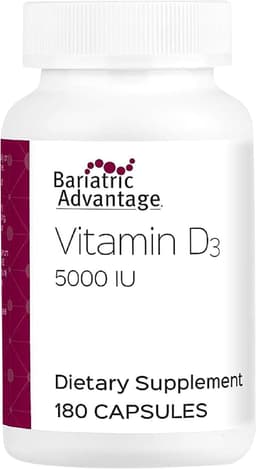
Bariatric Advantage
Vitamin D3 5000 IU Water-Miscible
Water-miscible D3 absorbs without needing dietary fat, key for bariatric patients with reduced fat absorption.
Buy on Amazon →Why is vitamin D deficiency so common after gastric bypass?
Vitamin D3 vs D2: Why Form Matters After Bypass
D3 · Recommended
- ✓ More potent
- ✓ Raises blood levels faster
- ✓ Used by ASMBS
- ✓ Found in softgels
D2 · Avoid
- ✗ Less effective
- ✗ Requires conversion
- ✗ Lower potency at same dose
Vitamin D is a fat-soluble vitamin. It is absorbed in the small intestine, primarily in the duodenum and early jejunum. Both of these areas are bypassed during Roux-en-Y gastric bypass. This means that the part of your gut that absorbs vitamin D most efficiently is no longer part of your normal digestive route.
Combined with reduced dietary fat intake after bypass, and often lower sun exposure in people who were previously less active, the result is that many bypass patients arrive at surgery already low in vitamin D and fall further after surgery if they do not supplement aggressively.
Research shows that 50 to 80 percent of bariatric surgery patients are deficient in vitamin D before surgery. After surgery, without adequate supplementation, that number climbs further.
How much vitamin D do you need after gastric bypass?
The ASMBS recommends a minimum of 3,000 IU of vitamin D3 per day after gastric bypass. Johns Hopkins and other major bariatric programs recommend doses in the range of 3,000-6,000 IU daily, with adjustments based on blood levels.
This is much higher than the standard recommended daily intake of 600-800 IU for healthy adults. The higher dose is necessary because of impaired absorption in the bypassed intestine.
Always supplement with vitamin D3 (cholecalciferol) rather than vitamin D2 (ergocalciferol). Research shows that D3 is more effective at raising blood levels. The ASMBS guidelines note that a 70 to 90 percent lower dose of D3 is needed compared to D2 to achieve the same effect.
What does low vitamin D do to your body?
In the short term, low vitamin D may cause fatigue, muscle weakness, and general aches. These symptoms are easy to dismiss as normal post-surgery tiredness.
The longer-term consequences are more serious. Chronic vitamin D deficiency after bariatric surgery contributes to metabolic bone disease. This means your bones lose density over time. The medical terms for this are osteopenia (low bone density) and osteoporosis (severe bone loss).
Bariatric patients are already at increased risk for bone loss because of reduced calcium absorption and changes in parathyroid hormone after surgery. Vitamin D deficiency adds to this risk significantly.
Low vitamin D also affects your immune system, muscle function, mood, and may be linked to increased risk of cardiovascular disease.
How does vitamin D relate to calcium absorption?
Vitamin D and calcium work together. Vitamin D is essential for calcium absorption in the gut. Without enough vitamin D, your body cannot absorb calcium properly even if you take adequate calcium supplements.
This is why bariatric programs consistently recommend taking vitamin D alongside calcium. The two nutrients are paired for good reason.
If your vitamin D is chronically low, your calcium supplements may not be doing their full job.
Calcium citrate is the right form of calcium after bypass. Learn the correct dose, timing, and why form matters.
Read: Calcium After Gastric BypassWhat should your vitamin D blood level be?
The standard blood test for vitamin D is 25-hydroxyvitamin D, often written as 25(OH)D. Target ranges after bariatric surgery are generally 30 to 60 ng/mL, with many bariatric programs aiming for levels above 40 ng/mL.
Below 20 ng/mL is considered deficient. Between 20 and 29 is insufficient. If you fall below 30, supplementation doses typically need to increase significantly.
Test your vitamin D at every follow-up blood draw, and discuss your results with your bariatric dietitian.
Is the vitamin D in your multivitamin enough?
Maybe, but often not on its own. Many bariatric multivitamins contain 2,000-3,000 IU of vitamin D3. This meets the minimum ASMBS recommendation, but some patients need more to reach and maintain target blood levels.
Always check the label of your multivitamin. Look for vitamin D3 specifically, not D2. If your blood levels are not reaching target despite taking your multivitamin, additional vitamin D3 supplementation is appropriate.
Standalone vitamin D3 supplements are inexpensive and widely available. Softgel capsules are the most bioavailable form because they contain oil, which improves absorption of this fat-soluble vitamin.
What is the best time to take vitamin D after bypass?
Take vitamin D with a meal that contains some fat. Fat-soluble vitamins are absorbed better when fat is present in the gut.
If your multivitamin contains vitamin D, taking it with your largest meal of the day is a good strategy. If you take additional standalone vitamin D, take it at a different time of day from your calcium to avoid any absorption competition.
What happens if you are already deficient?
If your blood test comes back low, your bariatric team may prescribe a high-dose loading protocol. This typically involves 50,000 IU of vitamin D2 or D3 weekly for eight to twelve weeks, followed by regular maintenance dosing.
Do not try to self-correct a serious deficiency without guidance. High-dose protocols need monitoring because vitamin D toxicity is possible at very high doses, though this is uncommon.
Once your levels stabilize, the goal is to stay consistent with daily maintenance dosing and test regularly.
The bottom line on vitamin D after gastric bypass
Vitamin D deficiency is common, preventable, and detectable. The minimum target is 3,000 IU of vitamin D3 daily. Blood levels should be tested at every follow-up. Target 30 to 60 ng/mL. Take D3, not D2. Take it with a meal containing fat.
This is one of the less visible nutritional requirements after bypass. But bone loss from vitamin D deficiency is real and accumulates over years. Start paying attention now.
Vitamin D Quick Reference
Daily target: 3,000 IU minimum. Use D3, not D2. Take with a fat-containing meal. Blood test: 25(OH)D. Target: 30 to 60 ng/mL. Test at every follow-up.
Ready to find your best bypass vitamin?
We compared all 15 options by price per day, iron content, and full ASMBS nutrient breakdown. Updated weekly.
Compare All 15 Bypass Vitamins →Frequently Asked Questions
Why do I need more vitamin D than healthy adults after bypass?
After gastric bypass, the part of the small intestine that absorbs vitamin D most efficiently is bypassed. This means you absorb a fraction of each dose compared to someone with intact digestion. The ASMBS recommends a minimum of 3,000 IU of D3 daily, compared to 600-800 IU for healthy adults.
What is a good vitamin D blood level after bypass?
Target range is 30 to 60 ng/mL (25-hydroxyvitamin D). Many bariatric programs aim for above 40 ng/mL to maintain a safe buffer. Below 20 ng/mL is clinically deficient.
Can I get enough vitamin D from sun exposure?
Sun exposure alone is not sufficient for bypass patients. Reduced dietary fat intake and impaired intestinal absorption make consistent supplementation essential regardless of sun exposure.
Related Articles
What Vitamins Do You Need After Gastric Bypass?
Full overview of all vitamins needed for life after Roux-en-Y.
Read →Best Calcium Citrate After Gastric Bypass
Calcium citrate ranked by price per day. Updated April 2026.
Read →How Much B12 Do You Need After Gastric Bypass?
B12 deficiency is silent and preventable. Learn the right dose and form.
Read →